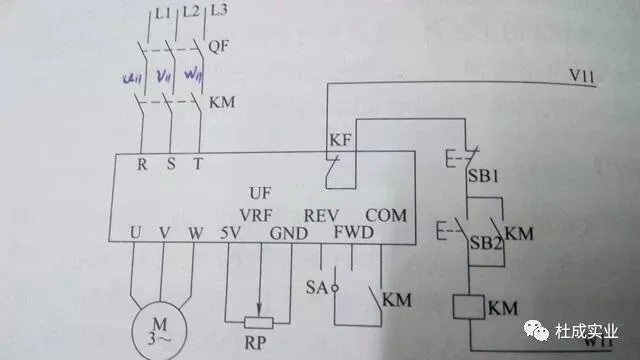
The main function of the inverter is to control the speed and torque of the AC motor by adjusting its frequency. The circuit includes two main parts: the load working circuit and the control circuit. The inverter realizes forward and reverse rotation and speed adjustment by controlling the contactor in the motor. When starting, the contactor coil self-locks, and then determines whether the motor runs forward or backward by selecting switch SA, and when stopping, the contactor coil resets and cuts off the power supply.
Frequency converter structure and function
The main function of the inverter is to control the speed and torque of the AC motor by adjusting its frequency. The circuit includes two main parts: the load working circuit and the control circuit.
Control process
The frequency converter realizes forward and reverse rotation and speed adjustment by controlling the contacts in the motor. When starting, the contactor coil self-locks, and then determines whether the motor runs forward or backward by selecting the switch SA, and when stopping, the contactor coil resets and the power is cut off.