
Reliable variable frequency drive repair services for industrial plants. Compare on-site diagnosis, workshop repair, and MV reconditioning options.
A critical line trips at the worst possible moment. The motor coasts down, the operator wants an immediate restart, and maintenance must decide whether to reset the fault, call for support, or install a spare that may not be ready. In that pressure window, variable frequency drive repair services either protect production or add delay.
The service provider should separate low-voltage and medium-voltage conditions from the start. A small low-voltage unit may be diagnosed and repaired quickly, while a large cabinet drive needs different handling, and a medium-voltage asset may be unsafe or impractical to move. The first decision is not “repair or replace.” It is whether the fault can be isolated on site, whether controlled recovery is safe, and whether the drive needs workshop repair, on-site reconditioning, refurbishment, or replacement.
That decision sequence controls downtime. Field diagnosis can prevent an unnecessary shipment; on-site work can make more sense for a large medium-voltage drive; workshop repair remains appropriate when disassembly, component-level testing, or extended functional checks are required. Treating every drive the same creates avoidable cost and schedule risk.
The installed base continues to expand, increasing demand for service and preventive work. The global VFD market was estimated at USD 28.38 billion in 2024 and projected to reach USD 39.67 billion by 2030 (Grand View Research). That growth means more aging equipment, more fault decisions, and greater pressure to identify the right service path on the first call.
Table of Contents
- When a Drive Fails on a Critical Line
- How Field Engineers Diagnose a Drive Before Touching It
- Controlled Restart and Rapid Restore on Site
- When the Drive Has to Leave the Site
- On-Site Blue Reconditioning for Medium and High Voltage Drives
- Repair, Refurbish, or Replace
- SLAs, Timelines, and What to Ask Before Signing
- Putting the Service Models to Work
When a Drive Fails on a Critical Line
A critical line trip is never abstract. Somebody hears the alarm, production stops moving, and the first question is whether the fault is local, recoverable, or a sign that the drive is done. That's why I break service work into four distinct models, not one generic repair bucket.
The four responses you actually need to distinguish
On-site diagnosis and controlled restart is the fast triage path. Use it when the drive tripped, the motor stopped, and you need a technician to isolate the problem before anyone starts swapping boards.
Deep workshop repair is for faults that need disassembly, bench diagnostics, component-level repair, and full functional testing away from the cabinet.
Preventive shutdown care is the planned work that keeps heat, contamination, loose terminations, and aging parts from becoming the next emergency.
On-site MV reconditioning is the answer when shipping a large medium-voltage drive is slow, risky, or unrealistic.
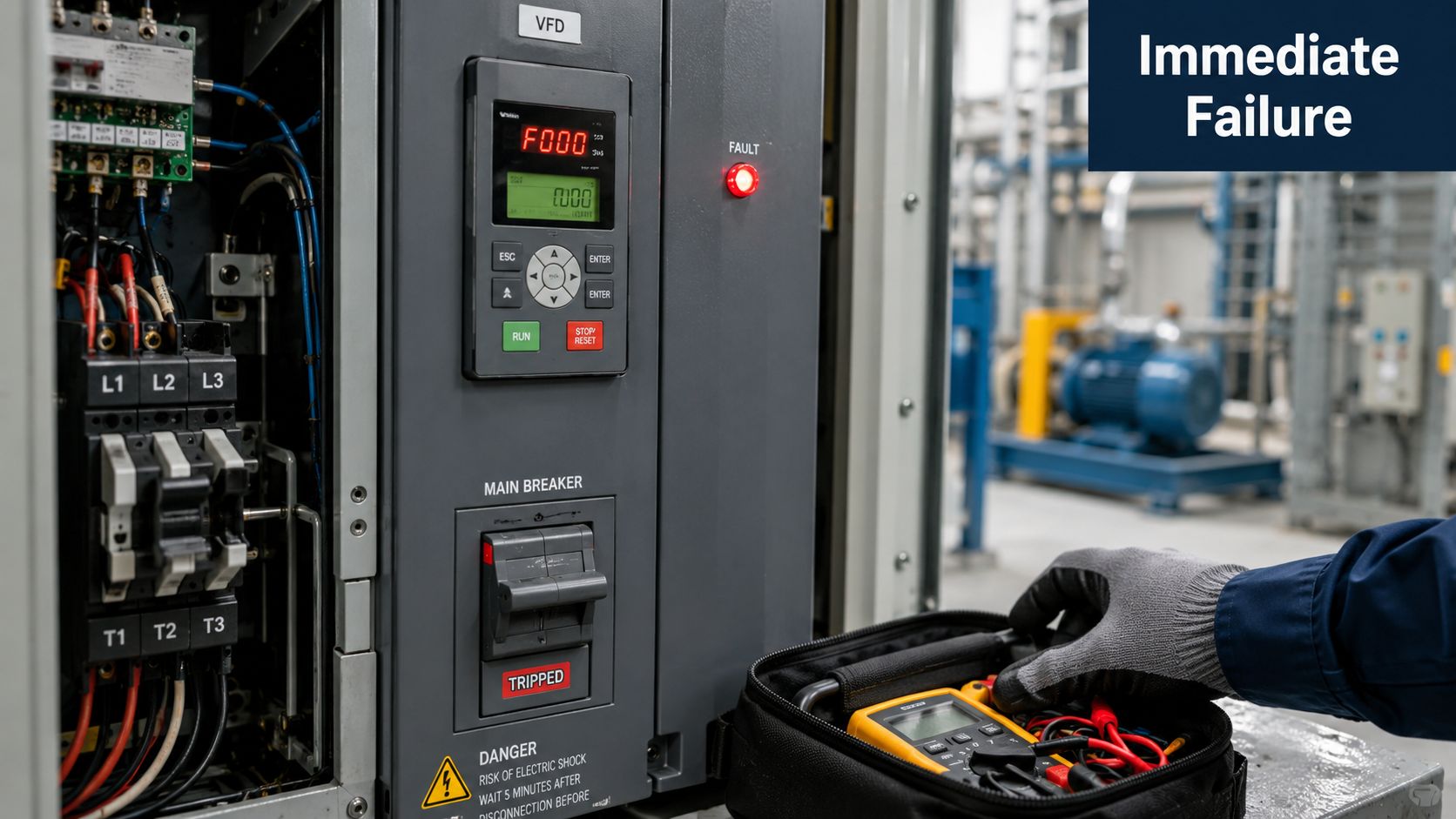
Practical rule: don't call every fault a repair problem. Some faults are diagnosis problems, some are cooling problems, and some are end-of-life problems.
The installed base keeps expanding, so the risk of choosing the wrong response expands with it. In industrial facilities, repair demand is concentrated where uptime matters most, and that's exactly where downtime mistakes get expensive. If you want a useful mental model, start with the question, “Can this unit be safely brought back now, or does it need controlled recovery under test conditions?” That one question separates competent service from expensive improvisation.
How Field Engineers Diagnose a Drive Before Touching It
A drive trips on a critical line, production stops, and the pressure to replace a board arrives immediately. Resist it. The first job is to establish whether the drive failed, or whether incoming power, the motor circuit, or the operating setup created the fault. A serious service engagement is a sequence of decisions: diagnosis, controlled recovery, deeper repair or refurbishment, and finally a replacement decision.
Separate the problem before you touch the hardware
Start with the evidence already stored in the unit. Review the fault history, operating conditions, recent process changes, and the timing of the trip. Then inspect the cabinet, terminals, grounding, cooling condition, and signs of contamination or heat damage.
Loose terminals, poor line quality, voltage spikes, single-phasing, and undersized wiring can make a healthy drive look defective. Test the input side, output side, motor cable, motor, and parameter set as separate parts of the fault path, as outlined in the Precision Elec guide. This prevents a power-stage replacement when the cause sits upstream or in the driven load.
A disciplined diagnosis follows the fault evidence rather than the part catalog. Visual inspection comes before intrusive work. Supply quality and phase balance must be verified, then output behavior and motor-cable condition. Parameter errors, an incorrect motor setup, and load mismatch can also resemble hardware failure.
If the service provider cannot show how input faults, output faults, motor faults, and parameter faults were separated, the conclusion is unproven.
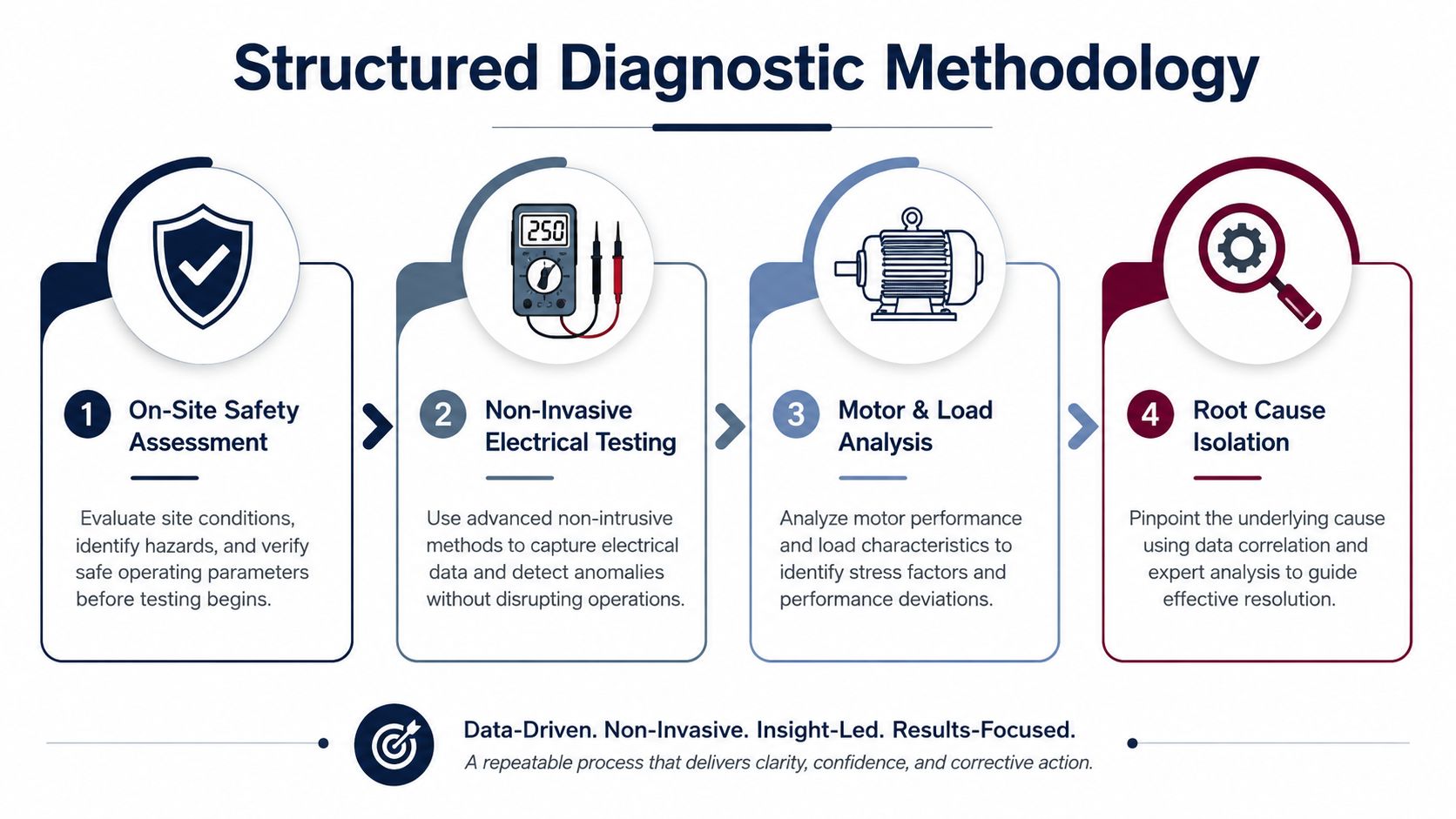
Ask what measurements support the proposed action. A useful report should connect fault history with supply checks, output checks, load behavior, and parameter validation. “Bad board” is not a diagnosis until those alternatives have been ruled out.
<iframe width="100%" style="aspect-ratio: 16 / 9;" src="https://www.youtube.com/embed/sKbO6ghAO8o" frameborder="0" allow="autoplay; encrypted-media" allowfullscreen></iframe>Use this internal guide on variable frequency drive troubleshooting as a checklist when reviewing the provider's method. The decision point is clear: low-voltage units may support faster component-level evaluation, while medium-voltage equipment demands stricter isolation, testing, and risk control before any repair path is selected. A wrong diagnosis costs parts, labor, production time, and may cause secondary damage during restart.
Controlled Restart and Rapid Restore on Site
Production is waiting, alarms are active, and a reset button is not a recovery plan. Once diagnosis shows that the drive can remain in service, the engineer must restore operation in a sequence that controls risk and proves the original condition has been corrected.
What a controlled restart should look like
The technician begins by reviewing the fault history and confirming the initiating condition is no longer present. They then verify safety circuits, inspect cooling paths, and check that the enclosure is free from contamination and excessive heat. Blocked airflow, clogged heatsink fins, failed cooling fans, and dirty cabinets increase internal temperature, accelerating degradation in capacitors and power semiconductors (GoEMC failure causes).
Environmental correction often matters more than immediate board replacement. In a hot or dirty cabinet, cleaning the enclosure, restoring airflow, and validating the drive under load address the condition that caused the trip. Replacing a board without correcting that condition leaves the same failure path in place.
The restart itself should be monitored. The engineer re-energizes the drive while observing its startup behavior, confirms stable output, and checks the motor and enclosure as load returns. The sequence should include clear hold points, so the team can stop before a minor abnormality becomes secondary damage.
A low-voltage drive may return to service quickly after these checks. Medium-voltage equipment requires tighter isolation, verification, and operating controls before energization. The faster-looking option is not automatically the safer one when a failed restart can extend downtime.
Don't confuse reset with recovery. If the fault cause hasn't been corrected, the next trip is already built in.
For a maintenance manager, a credible rapid-restore call includes fault-history review, confirmation of corrective action, cooling-path inspection, monitored re-energization, and documented operating checks. Ask for those steps in the service record. If an engineer goes straight from reset to full production without validating the cause and the operating environment, the plant has not recovered. It has only restarted the failure cycle.
When the Drive Has to Leave the Site
Some failures don't belong in a cabinet at all. If the power stack is damaged, a gate-driver board is cracked, the rectifier is contaminated, or the unit needs full load testing before release, the drive needs workshop attention. That's not a detour. It's the right environment for the job.
What serious workshop repair actually includes
At intake, the unit should be documented, photographed, and tagged before disassembly. Then the technician moves into bench diagnostics, typically tracing the fault down to the component or subassembly that failed instead of replacing broad assemblies blindly. After that comes repair or replacement of the damaged part, reassembly, and functional testing that mirrors real operating conditions.
The workshop matters because it gives the technician room to test, measure, and verify without plant pressure. Inside a live cabinet, there's always a temptation to rush, especially when people are waiting on production. A workshop lets the service team separate a true electronic failure from a contamination issue, an aging component issue, or a secondary fault caused by upstream power stress.
Use this internal comparison of onsite and workshop work as a sanity check when a provider claims every drive can be fixed in place. It usually can't. The better provider will tell you when off-site repair is the safer choice and will hand the drive back with enough documentation to justify the decision.
What you should demand on return is straightforward. Ask for the fault cause, the repaired components, the test method, and the final verification result. If those four items aren't clear, you don't really know what came back. You just know the box was returned.
On-Site Blue Reconditioning for Medium and High Voltage Drives
Shipping a large medium-voltage drive to a workshop often creates more risk than it removes. The unit may be too heavy, too integrated, or too critical to move without creating a second outage. That's why on-site blue reconditioning stands on its own as a service model, not a marketing label.
Why MV assets are handled differently
Medium-voltage drives in steel, tire, chemical, mining, and utility plants usually sit at the center of processes where transport delays cost more than field labor. Keeping the asset in place lets the service team work inside a planned shutdown window, keep logistics simple, and avoid the handling risk that comes with removal and reinstallation. For large MV systems, that is often the only practical route.
A proper on-site reconditioning scope goes beyond cleaning. It should include deep cleaning, component replacement where needed, insulation testing, parameter verification, and recommissioning. The aim is to restore the drive as a live asset, not just make it look presentable.
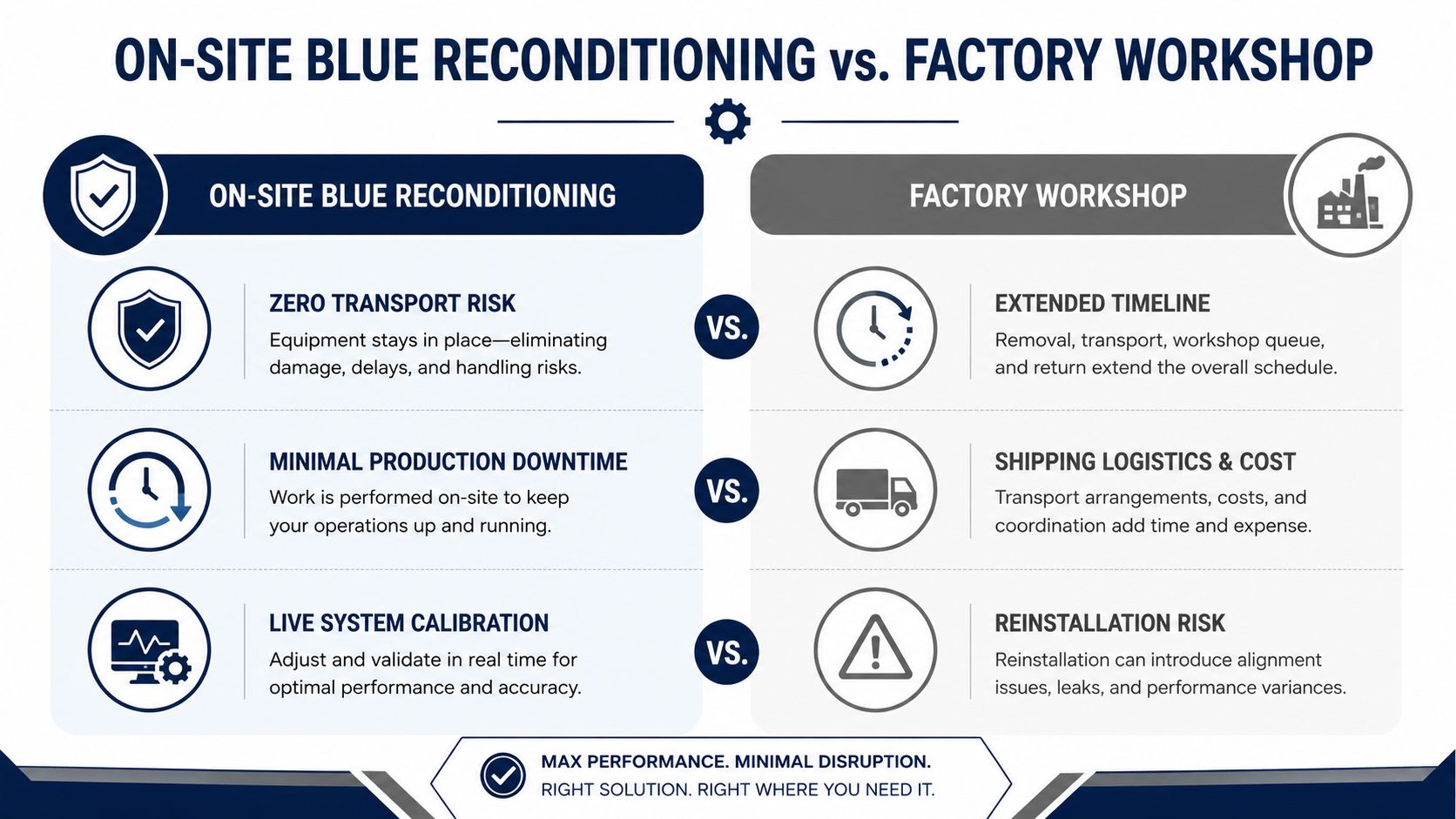
The field trade-off is straightforward. Workshop repair gives you controlled bench conditions. On-site reconditioning gives you zero transport risk, closer integration with the actual system, and a faster return to production when the shutdown window is tight. If the drive is large, awkward, or tightly coupled to the process, on-site work is the correct format.
One point matters more than the label on the service sheet.
DUCHENG Industrial fits in this category because it offers on-site reconditioning for medium- and high-voltage drives, along with broader lifecycle services for drive assets. That only matters if the team can execute the scope, not just promise it. For MV work, I care less about sales language and more about whether the provider can clean, test, replace, verify, and recommission on the asset without turning the shutdown into a rescue mission.
Repair, Refurbish, or Replace
This is the decision most guides gloss over. They tell you to “consider age” and “check cost,” which is too vague when the line is down and every hour matters. A maintenance manager needs a tighter rule set, because the wrong call either keeps a weak drive in service or scraps one that still has usable life.
Use failure mode, not habit
Start with the failure pattern. One-off input-side issues, failed fans, or a contaminated cabinet call for repair or preventive correction. Component-level power-stage damage calls for workshop refurbishment. Recurring faults, obsolete parts, or repeated thermal abuse make replacement the cleaner choice.
Public guidance still leans on age thresholds like 12 to 15 years, but age alone does not make the decision. The question is whether the drive is hiding multiple faults and whether the parts are still available. Analysts at Grand View Research note that the installed base keeps expanding, so lifecycle calls matter more, not less. If the drive still protects energy savings and process stability, replacement needs a strong case.
The table below is the practical version of that rule set. It turns condition, trigger, and risk into a decision you can defend in a shutdown meeting, instead of a guess made under pressure. Use it to separate a recoverable asset from one that needs a deeper intervention.
| Asset Condition | Recommended Service | Typical Trigger | Risk if Ignored |
|---|---|---|---|
| Clean unit with a recoverable trip | On-site repair | Single fault, upstream issue, fan or cooling problem | Repeat trip and avoidable downtime |
| Power-stage or board-level damage | Workshop refurbishment | Component failure, failed bench test, contamination inside the unit | Secondary damage from partial repair |
| Recurrent faults, parts risk, aging platform | Replacement | Obsolescence, repeated failures, poor spare availability | Ongoing downtime and unstable operation |
| Large MV unit that can't be moved safely | On-site reconditioning | Shutdown window, shipping risk, field-access constraints | Excess handling risk and prolonged outage |
My rule: if you can prove the fault is isolated and the parts exist, repair. If the drive is hiding multiple issues, refurbish or replace. Don't let habit make the call for you.
SLAs, Timelines, and What to Ask Before Signing
Before you sign any service agreement, get written answers to five questions: who takes the call, how fast the fault gets triaged, what the diagnostic report includes, how parts are handled, and what proves the drive is fit to return to service. A vague “fast turnaround” is useless when production is down and electricians are waiting on release.
Turn vague promises into concrete questions
Use the SLA to force specifics. Emergency triage should spell out the response window, the diagnostic report timing, the parts provision expectation, and the validation step after repair. If a provider cannot state those clearly, the SLA is marketing, not a commitment. In major industrial markets, regional coverage and 24-hour emergency contact channels matter because they shorten the gap between fault and decision.
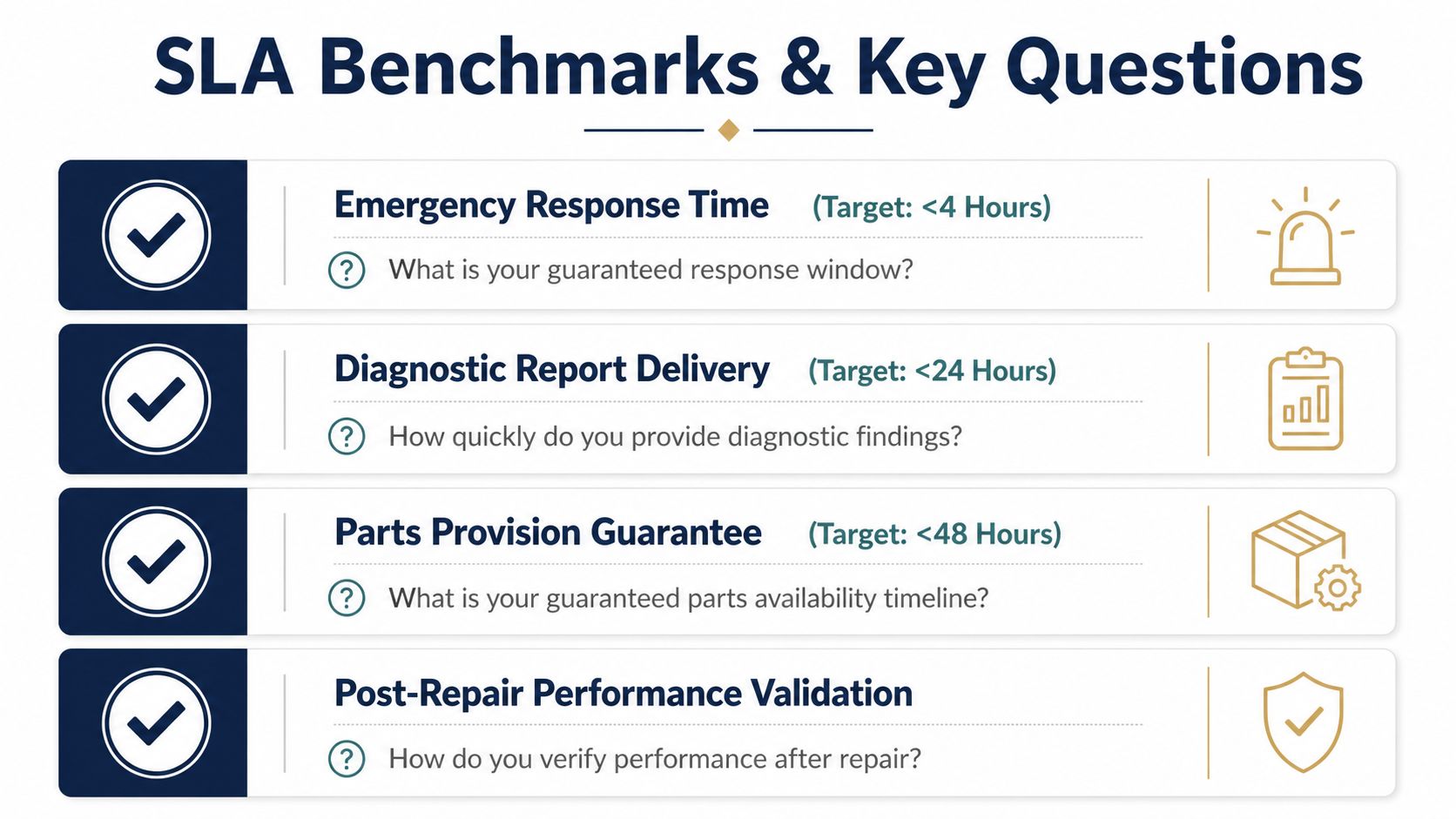
Ask these questions before you sign anything.
- Emergency response: what is your guaranteed response window, and does it cover my site region?
- Diagnostic report: when do I get the fault summary and repair recommendation?
- Parts handling: how do you confirm part availability before opening the unit?
- Validation: what test proves the drive is ready to return to service?
- Capability: can you handle low-voltage, medium-voltage, and high-voltage assets, or only one slice of the stack?
- Environment experience: have you worked in hot, dirty, or high-salinity sites where contamination and thermal stress are common?
Manufacturer authorization is useful, but documented diagnostic methodology and field experience in harsh environments are more important indicators of capability. The best providers show how they isolate the fault, how they test the fix, and how they prevent the same failure from coming back. As noted in market analysis from Grand View Research, 2024, service coverage matters because installed drives keep spreading across industrial sites, and downtime decisions keep getting more expensive.
Putting the Service Models to Work
Use a simple rule. Start with on-site diagnosis and controlled restart unless the fault clearly demands removal. Move to workshop repair when the problem is component-level or needs controlled bench testing. Choose on-site MV reconditioning when the drive is too large or too integrated to ship safely. Reserve preventive shutdown care for the assets you don't want to lose in the first place.
That decision path protects more than one drive. It protects uptime, preserves the energy savings the original installation justified, and keeps you from turning every trip into a replacement discussion. Most failures don't need drama. They need the right service model, applied fast, by people who know the difference between a recoverable fault and a terminal one.
If you need a partner that can diagnose, repair, recondition, and support VFDs across the asset lifecycle, DUCHENG Industrial handles multi-brand drive services for commissioning, troubleshooting, workshop repair, preventive care, and on-site MV reconditioning. Visit DUCHENG Industrial to review its lifecycle service scope and request support for your next critical drive fault.